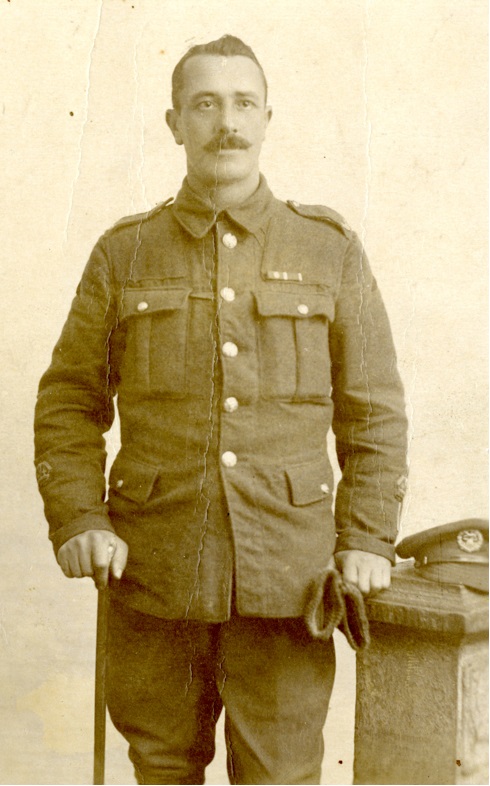
 Thrice decorated, wounded and promoted from the ranks, Captain Joseph Milne was one of the only men of the 2nd Battalion to serve from their first day of action at Gallipoli on the 25th April 1915, through to the end of the war on the 11th of November 1918.
Born in Edinburgh in 1881, the Milne family later moved to the Isle of Wight. In 1899, at the age of 18, Joseph enlisted in the Hampshire Regiment. He served with the 1st Battalion in Aden and Somaliland before transferring to the Regimental Depot and a few years later, to the 2nd Battalion in Mauritius. Joseph steadily advanced up the ranks and on the outbreak of the First World War was a Sergeant.
Joseph fought throughout the Gallipoli campaign and was wounded by shrapnel during the 2nd Battle of Krithia. He was awarded a Distinguished Conduct Medal for consistently leading his Platoon with the utmost gallantry throughout the early stages of the campaign. He was probably evacuated to England to recover from his wounds as he briefly served with the 3rd Battalion which was home-based and his DCM was personally presented to him by Lord French (former commander of the British Expeditionary Force).
Joseph soon returned to active service with the 2nd Battalion and won a Bar to his DCM whilst serving as a Company Sergeant Major during the battle of Cambrai by “going out on his own initiative with a patrol and working his way up to a machine gun that was causing casualties, opening fire on the gunners, and succeeding in driving them back”.
Joseph was commissioned as a Second Lieutenant in June 1918 where he would lead a Platoon of Y Company, 2nd Battalion for the remainder of the war.
On the 17th of October 1918, the 9th Division held a precarious bridgehead over the Lys River; German artillery fire smashed the bridges supplying the lodgement and scant supplies were being dropped by air to the beleaguered troops. The famous Brigadier General Freyberg VC GCMG KCB KBE DOSO with three bars KStJ (then commanding the 88th Brigade) personally crossed into the bridgehead and decided to evacuate the position. The 2nd Battalion provided Lewis gun teams to cover the withdrawal and in the dark of night, the 9th Division men were evacuated. Joseph, accompanied by Freyburg, commanded the last party to recross the Lys, and was awarded the Military Cross for his leadership in the action which proved to be one of the last for the 2nd Battalion in the War.
Joseph led his platoon across the German border on the 5th of December 1918. In recognition of his service, he was selected as part of the guard that returned to England to retrieve the Battalion’s colours from Winchester Cathedral.
Joseph continued to serve with the 2nd Battalion in Russia in 1919 and Ireland in 1920; he left the Army in 1922.
This photograph was taken of Milne when he was a sergeant; some of his effects, including his Commissioning Parchment and Military Cross citation, are held in the museum’s collection.
Chris Waters – Museum Assistant

