 In November 1917, the Ottoman defences in Gaza had been broken, and the 2/4th Battalion of the Hampshire Regiment found itself pursuing the Ottomans towards Jerusalem.
Nebi Samwil, the site of the historic tomb of the Prophet Samuel, lay in the path of the Allied advance. The tomb has religious significance to Christians, Muslims and Jews and had historically been fortified as a Crusader fortress, with a mosque later being built over the site with the complex sitting atop a hill.
The geographic importance of the heights rivalled its religious importance, with the high ground offering observation over Jerusalem with a view stretching all the way back to the Mediterranean. The Ottomans harassed the British advance with artillery and machine gun fire directed from the peak.
A determined night attack on the 20th of November 1917 by the 234th Brigade captured Nebi Samwil. Three Companies of the 2/4th Battalion of the Hampshire Regiment and a Battalion of Gurkhas were sent to support the Brigade; as it turned out, the Brigade would need all the help it could get.
On the 22nd a large counterattack was mounted. The Ottoman 72nd Infantry Regiment, supported by an artillery battalion, fell upon Nebi Samwil whilst the 24th Division and the Ottoman 3rd Cavalry Division would attack further North.
The 2/4th Battalion was in reserve with two Companies (A and C) 150 yards behind the tomb whilst Battalion HQ and B Company were a mile further back. The British positions took some scattered shelling throughout the night, but on the morning of the 22nd of November the barrage reached a new intensity with the tomb’s minaret providing a perfect ranging marker for the Ottoman guns.
The first Ottoman attack was repulsed, and the men of C Company were detailed to carry ammunition up the hill to the forward line to sustain the defence. A second attack fell on the left flank with the 3/3rd Gurkhas bearing the brunt of the offensive; B Company and Battalion HQ sprang into action and restored the line with a fierce counterattack.
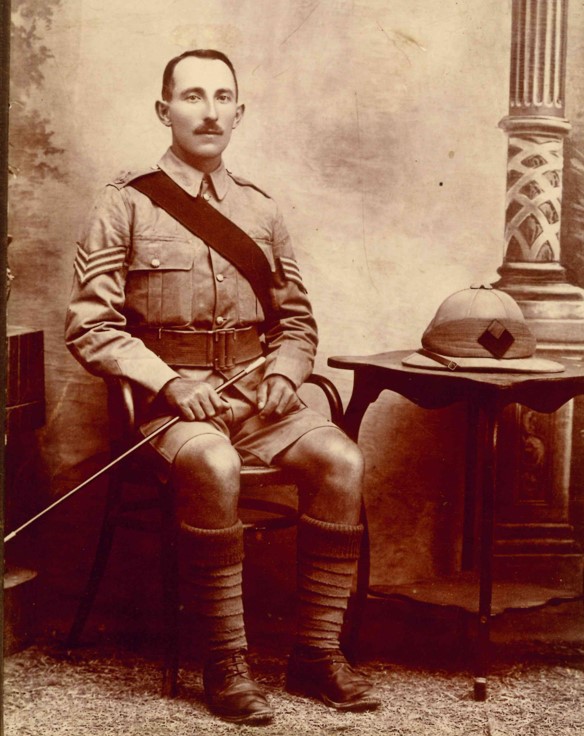
Elsewhere, the situation became extremely dangerous as the Ottomans infiltrated a gap in the British line and seized an orchard close to Nebi Samwil itself – some Ottoman sources claim that the tomb itself was captured. Private Robert James Thomas of C Company helped to avert disaster by pinning the Ottomans in place with fierce fire from his Lewis Gun – time and again ‘with a complete indifference to danger’ he shifted positions to deliver the most effective fire possible. Sergeant Thompson of A Company performed an equal feat when another gap in the line appeared; on his own initiative, he led his platoon to plug the gap. With just three men by his side, he held a stone wall against repeated attacks through the rest of the day. Private Thomas and Sergeant Thompson were both awarded the Distinguished Conduct Medal for their actions.
As darkness fell, British reinforcements arrived and evicted the Ottomans from their gains. The 2/4th Battalion had suffered the loss of 26 soldiers, with a further 85 wounded throughout the day. Fierce fighting would continue to rage in the area with neither side able to break through. To some of the more historically minded men, it may have appeared that there was a risk of history repeating itself; Nebi Samwil was the closest point that Richard the Lionheart had reached during his attempt on Jerusalem in January 1192 during the Third Crusade. With so many Ottoman forces committed to Nebi Samwil and other actions, there were no reserves available to defend Jerusalem when the British broke through elsewhere, and Jerusalem was captured on the 9th of December 1917.
The 75th Division (which the 2/4th Battalion had reinforced) adopted the emblem of a key for seizing and holding ‘the key to Jerusalem ’ and the 2/4th Battalion earned the battle honour ‘Nebi Samwil’ for the Regiment with its key role in the battle. Sergeant Thompson is pictured.

